
The hiring landscape is changing rapidly. While technical expertise remains important, employers are increasingly prioritizing soft skills—especially communication, problem-solving, and leadership. Across Bangladesh, HR professionals are reporting that candidates with strong interpersonal and decision-making abilities often outperform technically qualified applicants who lack these competencies.
For organizations focused on long-term growth, this shift is not temporary. It reflects deeper changes in how businesses operate, compete, and manage talent in a fast-moving economy.
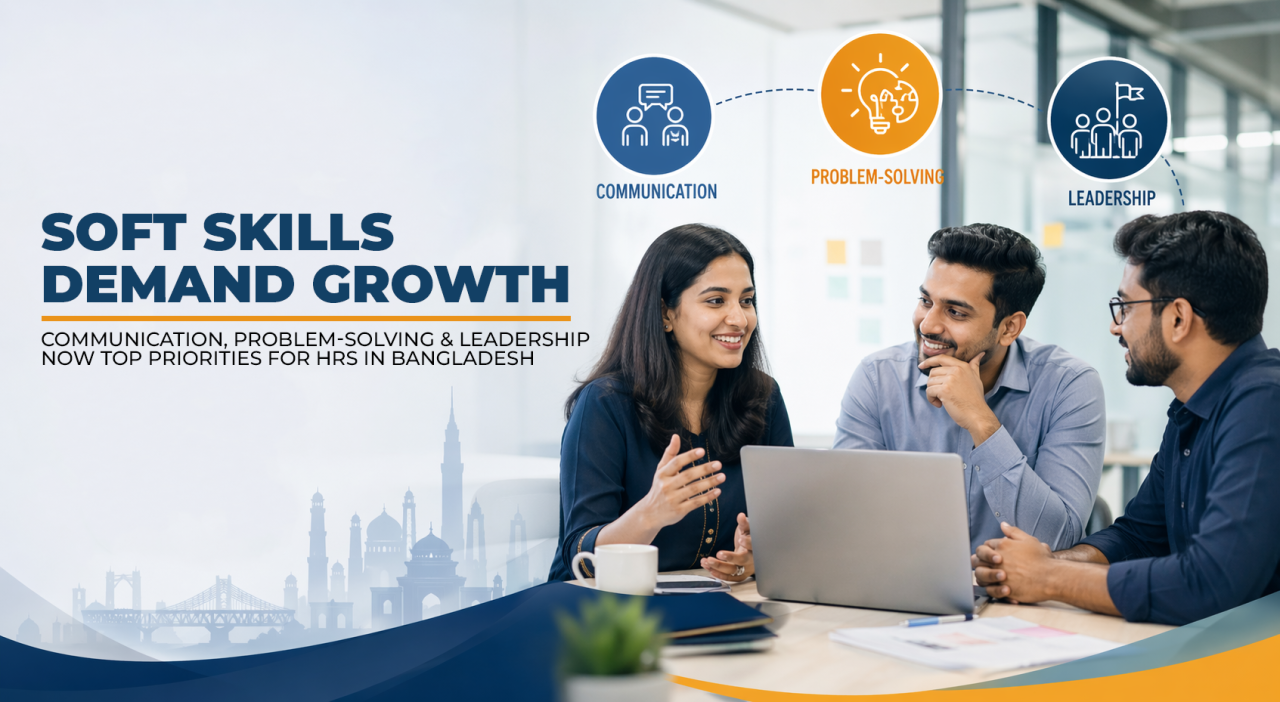
Why Soft Skills Are Rising in Importance
Bangladesh’s economy has expanded significantly over the last decade. Sectors such as ready-made garments (RMG), IT, telecom, banking, e-commerce, healthcare, logistics, and FMCG are evolving quickly. As businesses scale, adopt new technologies, and compete globally, workforce expectations have changed.
Today’s employees are expected to:
- Collaborate across departments
- Communicate with local and international clients
- Solve operational challenges independently
- Adapt to changing tools and processes
- Lead teams under pressure
This means technical qualifications alone are no longer enough.
According to global employer surveys by organizations such as the World Economic Forum and LinkedIn, communication, leadership, analytical thinking, and resilience consistently rank among the most in-demand workplace capabilities. These global trends are increasingly visible in Bangladesh as well.
Bangladesh Market Reality: What HR Teams Are Seeing
Many companies in Bangladesh face a common hiring challenge: candidates may have degrees and technical knowledge, but often struggle with workplace readiness.
HR professionals frequently identify gaps in:
- Professional communication in English and Bangla
- Email etiquette and reporting skills
- Team collaboration
- Conflict resolution
- Critical thinking
- Time management
- Ownership mindset
- Supervisory leadership readiness
This is especially relevant in mid-level recruitment, where organizations need employees who can execute tasks while managing people, deadlines, and cross-functional coordination.
For example:
In the RMG Sector
Supervisors and managers must communicate with buyers, factory teams, compliance officers, and production staff. Poor communication can create delays, quality issues, and client dissatisfaction.
In IT & Tech
Developers and engineers who can explain ideas clearly, work with clients, and solve business problems are often promoted faster than purely technical peers.
In Banking & Corporate Roles
Relationship management, negotiation, customer handling, and leadership directly impact business growth.
Why Communication Skills Lead the List
Communication is no longer just about speaking English fluently. It includes:
- Clear verbal communication
- Active listening
- Professional writing
- Presentation ability
- Negotiation skills
- Giving and receiving feedback
- Cross-cultural communication
In Bangladesh, companies dealing with overseas buyers, outsourcing clients, and multinational partners particularly value candidates who can represent the company professionally.
A technically strong employee who cannot communicate progress, issues, or solutions often becomes a bottleneck.
Problem-Solving: The New Performance Indicator
Employers increasingly want people who can think independently rather than wait for instructions.
Strong problem-solvers can:
- Identify root causes
- Make decisions using data
- Suggest improvements
- Handle pressure calmly
- Reduce delays and waste
- Innovate practical solutions
In Bangladesh’s competitive market, operational efficiency matters. Companies want employees who save time, prevent mistakes, and improve productivity.
Leadership Is Needed Earlier Than Before
Previously, leadership was expected mainly at senior levels. That is changing.
Now organizations need leadership at:
- Team lead level
- Supervisor level
- Department coordinator level
- Project owner level
Leadership today means:
- Taking ownership
- Motivating teams
- Managing conflict
- Coaching juniors
- Driving accountability
- Delivering results ethically
As businesses grow faster, they cannot wait years to develop future leaders.
Why This Matters for HR Departments
For HR leaders, hiring only on academic background or technical ability increases risk.
Employees lacking soft skills may create:
- High turnover
- Poor team culture
- Customer dissatisfaction
- Low engagement
- Internal conflict
- Weak succession pipelines
That is why progressive HR teams in Bangladesh are updating recruitment processes to assess behavior and mindset, not just CV qualifications.
Modern hiring methods now include:
- Behavioral interviews
- Role-play assessments
- Group discussions
- Situational judgment tests
- Leadership potential screening
- Communication assessments
What Employers Should Do Next
To remain competitive, Bangladeshi organizations should invest in structured soft skill development.
Recommended Actions:
- Add soft skill criteria to every job description
- Train managers on behavioral interviewing
- Launch internal communication workshops
- Build leadership development programs
- Reward collaboration and initiative
- Include problem-solving in performance reviews
What Candidates Should Do
Job seekers who want faster career growth should focus on:
- Speaking confidently
- Writing professional emails
- Learning workplace etiquette
- Practicing presentations
- Developing decision-making ability
- Managing people and pressure
- Taking initiative consistently
In many hiring decisions today, when technical skills are similar, soft skills become the deciding factor.
The Bangladesh job market is maturing. Employers no longer hire only for what candidates know—they hire for how candidates think, communicate, and lead.
Communication, problem-solving, and leadership are no longer “nice to have” skills. They are now core business skills.
For HR leaders, the message is clear: organizations that build these capabilities internally and hire for them externally will create stronger teams, better culture, and sustainable growth.
