
The recruitment landscape has changed dramatically over the last decade. Today’s organizations receive hundreds—sometimes thousands—of applications for a single vacancy. Managing this volume manually is no longer practical, especially for companies that need to hire quickly while maintaining quality.
An Applicant Tracking System (ATS) has become one of the most valuable technologies in modern talent acquisition. More than just a resume database, an ATS enables organizations to automate recruitment workflows, improve candidate experience, reduce hiring time, and make data-driven hiring decisions.
For businesses in Bangladesh, where digital transformation is accelerating across industries such as RMG, ICT, banking, healthcare, manufacturing, FMCG, and logistics, implementing an ATS is becoming less of a competitive advantage and more of a business necessity.
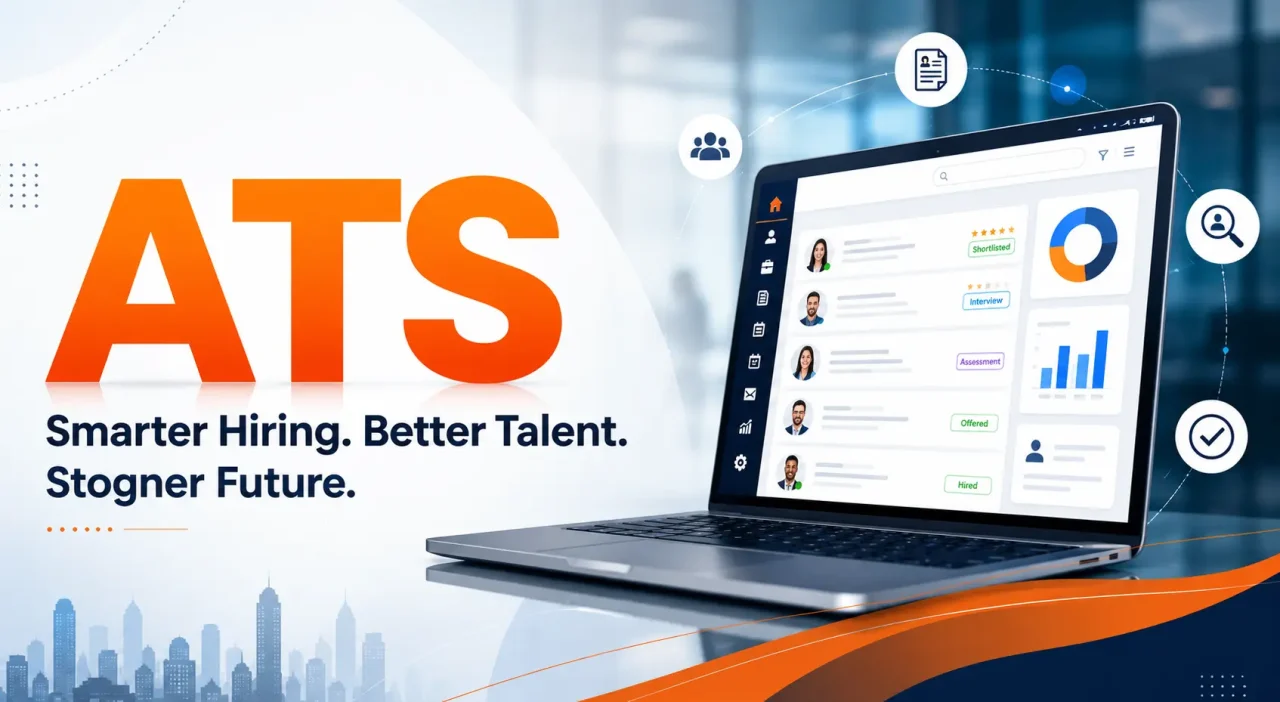
What is an Applicant Tracking System (ATS)?
An Applicant Tracking System (ATS) is recruitment software that helps organizations manage the entire hiring lifecycle from a single platform.
A modern ATS typically enables recruiters to:
- Publish job vacancies across multiple platforms
- Collect and organize applications automatically
- Screen resumes using predefined criteria
- Track candidate progress throughout the hiring pipeline
- Schedule interviews
- Collaborate with hiring managers
- Maintain candidate databases
- Generate recruitment analytics and reports
Instead of relying on spreadsheets and email chains, recruiters gain complete visibility into every stage of recruitment.
Why ATS Matters More Than Ever
Recruitment today is driven by three critical factors:
- Speed
- Candidate Experience
- Data
According to LinkedIn’s Global Talent Trends and recruitment industry research, organizations that embrace recruitment technology often experience:
- Faster hiring cycles
- Improved recruiter productivity
- Better candidate communication
- Higher quality hires
- Stronger employer branding
Candidates also expect a smooth digital application process. Delayed communication or inconsistent hiring experiences can negatively affect an employer’s reputation in today’s connected job market.
The Bangladesh Recruitment Landscape
Bangladesh’s workforce continues to expand alongside the country’s economic growth.
Industries including:
- Ready-Made Garments (RMG)
- Information Technology
- Financial Services
- Healthcare
- Manufacturing
- Telecommunications
- E-commerce
- Logistics
regularly recruit large numbers of professionals.
This creates several recruitment challenges:
- High application volumes
- Limited recruitment teams
- Pressure to hire quickly
- Increasing demand for skilled talent
- Competition for experienced professionals
Many organizations still rely heavily on manual recruitment processes involving spreadsheets, email folders, and printed CVs. While manageable for small-scale hiring, these methods become inefficient as recruitment volumes increase.
An ATS helps organizations overcome these limitations while creating a more scalable hiring process.
Key Benefits of an ATS
1. Faster Recruitment
Manual CV screening can consume significant recruiter time.
An ATS automatically filters applications based on qualifications, experience, skills, certifications, and keywords—allowing recruiters to focus on evaluating the most relevant candidates.
2. Better Candidate Experience
Today’s job seekers value timely communication.
An ATS enables:
- Automatic application acknowledgements
- Interview invitations
- Status updates
- Rejection notifications
- Offer communications
A professional recruitment process strengthens employer branding and builds trust among candidates.
3. Centralized Candidate Database
Recruitment data often becomes scattered across email inboxes, shared drives, and personal folders.
An ATS stores candidate information securely in one searchable database, allowing recruiters to revisit previous applicants for future openings instead of starting from scratch.
4. Smarter Hiring Decisions Through Analytics
Modern recruitment is increasingly data-driven.
An ATS provides valuable metrics such as:
- Time-to-Hire
- Cost-per-Hire
- Source of Hire
- Interview-to-Offer Ratio
- Offer Acceptance Rate
- Recruitment Funnel Performance
These insights help HR leaders continuously optimize recruitment strategies.
5. Improved Collaboration
Recruitment is rarely the responsibility of HR alone.
Hiring managers, department heads, and interview panels all contribute to candidate evaluation.
An ATS allows stakeholders to:
- Share feedback
- Review resumes
- Score interviews
- Approve hiring decisions
without relying on lengthy email chains.
ATS and Compliance
Maintaining accurate recruitment records is increasingly important for governance, audits, and internal reporting.
An ATS helps organizations maintain:
- Candidate histories
- Interview records
- Recruitment documentation
- Hiring approvals
- Reporting consistency
This creates greater transparency and reduces administrative risk.
Common Misconceptions About ATS
“ATS is only for large corporations.”
Not anymore.
Cloud-based recruitment platforms have made ATS solutions accessible for small and medium-sized enterprises (SMEs), startups, and growing organizations.
“ATS replaces recruiters.”
An ATS does not replace human judgment.
Instead, it automates repetitive administrative tasks so recruiters can spend more time assessing candidates, engaging talent, and supporting hiring managers.
“ATS only screens resumes.”
Modern ATS platforms manage the entire recruitment lifecycle, from job posting to onboarding support—making recruitment more organized and measurable.
The Future of Recruitment
Artificial Intelligence, automation, and predictive analytics are reshaping talent acquisition worldwide.
Emerging ATS platforms now offer capabilities such as:
- AI-assisted resume matching
- Automated candidate recommendations
- Skills-based hiring
- Recruitment forecasting
- Talent pipeline management
- Integration with HRIS and payroll systems
As Bangladesh’s digital economy continues to expand, organizations that invest in recruitment technology will be better positioned to attract, assess, and retain top talent.
Final Thoughts
Recruitment is no longer just an HR function, it is a strategic business capability. As organizations in Bangladesh continue to embrace digital transformation, Applicant Tracking Systems are becoming an essential part of building efficient, transparent, and scalable hiring processes.
Businesses that leverage ATS effectively are better equipped to reduce recruitment delays, improve candidate engagement, and make informed hiring decisions based on reliable data rather than intuition alone.
For companies aiming to stay competitive in an evolving talent market, investing in smarter recruitment technology today can create a stronger workforce for tomorrow.